Get the roofer’s measurements first
A roof’s footprint from the ground does not tell you the total surface area of its sloped sections. Ask the contractor who prepared your estimate for the roof area in squares, the material being removed, and how many layers are coming off. Owens Corning uses 100 square feet of coverage as a square in its product specifications. That definition is a useful way to understand the estimate, but it does not tell you how much debris will fit in a particular container. Do not use a generic square-count chart as a promise about A1’s dumpsters. A1 has not published a squares-per-container figure, and the job’s layers and material affect the amount removed.
Why roofing needs a weight conversation
A roof tear-off is different from a mixed household cleanout. Shingles and other roofing materials can add weight quickly, and the roof may include more than one layer. A container can look as if it has open space while the load is already heavy. That is why the estimate details matter alongside the dumpster’s cubic-yard size. Tell A1 the squares, material, number of layers, and whether your contractor expects to remove any other material. A1 can explain the two packages and their weight allowances. If those details are not available yet, ask the roofer before you reserve rather than guessing from the house size or the look of the roof.
Compare A1’s two package options
A1 rents a 16-yard dumpster for $300 for 1 to 3 days, including up to 3,000 lbs. The 20-yard costs $350 for 1 to 3 days and includes up to 4,000 lbs. Each extra day is $25. Above the included weight, the 16-yard has a $100 charge for each additional 3,000 lbs, and the 20-yard has a $100 charge for each additional 4,000 lbs. Those package terms do not specify a number of roofing squares. Ask A1 to talk through your estimate and the weight allowance before you choose. Same-day delivery is available when a dumpster is available, and there is no deposit.
Keep the placement discussion specific
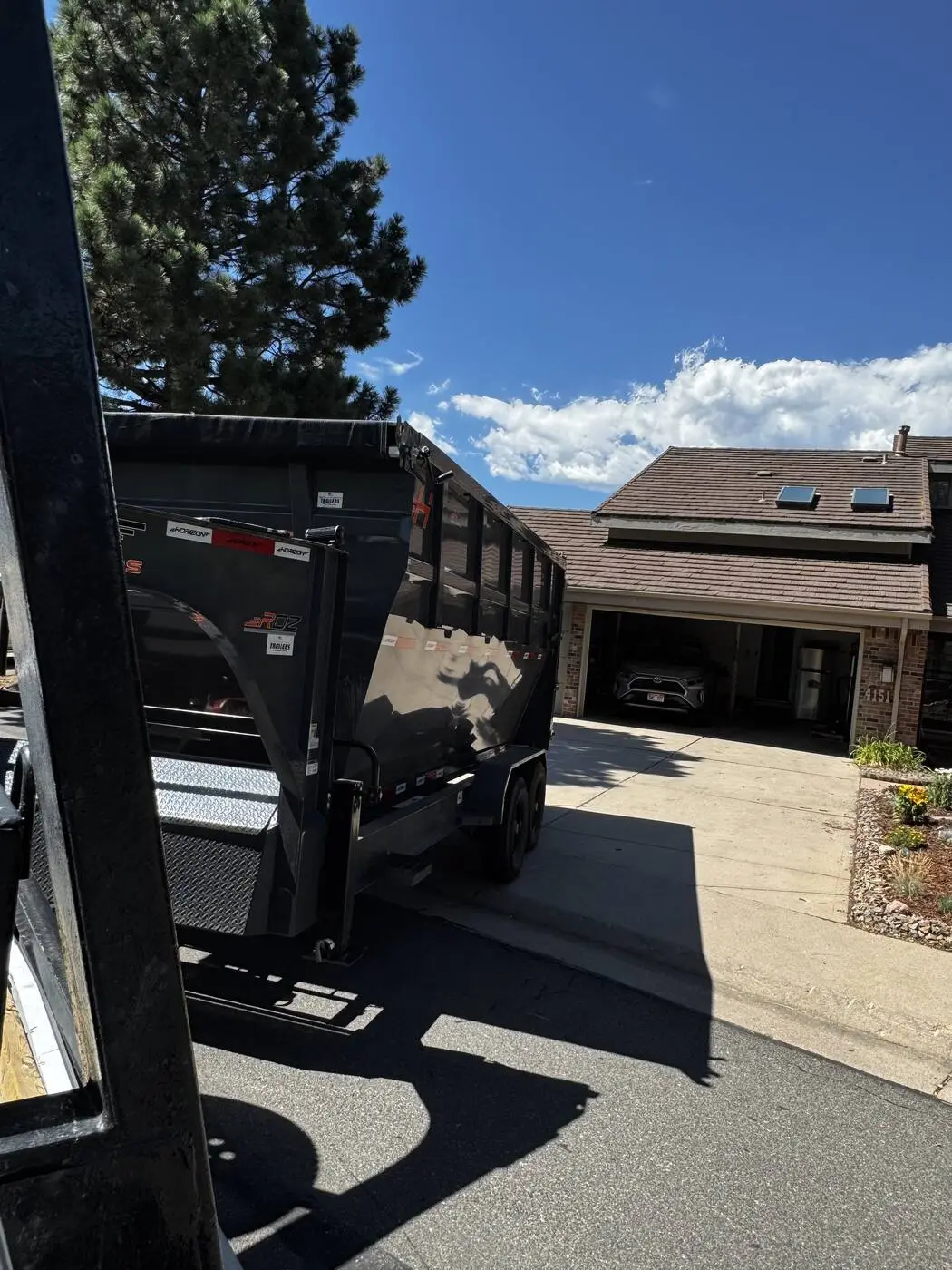
Before delivery, confirm where the container can sit and how the truck will reach that spot. If the only workable location is the street or another public right-of-way, verify the city’s process for that address. Requirements differ by municipality. Denver’s city page links to Denver DOTI’s right-of-way guidance. For another core service city, start at the service areas hub and open that city’s page. Tell A1 whether you are planning to use a driveway, and describe access concerns or obstructions. A clear placement plan helps the company confirm the request and avoids relying on a rule from a different city.
Call with the estimate in hand
A short list makes the call easier: roof area in squares, shingle or roofing material, number of layers, requested delivery date, and proposed placement. A1 does not allow tires, concrete, or dirt, so mention any non-shingle material you expect to remove and ask if it is accepted. Do not add unconfirmed debris to the container. You can compare these details with the size guide and A1’s pricing article. When ready, call or text Aaron at (720) 338-2178. He can check availability and talk through whether the 16-yard or 20-yard package is the better one to quote for your roof.
How many roofing squares fit in a dumpster?
A1 has not published a squares-per-dumpster capacity. Ask your roofer for the roof measurement and call A1 with the material and layer count to discuss the 16-yard and 20-yard options.
What does a roofing square mean?
A roofing square is a measurement of 100 square feet of roof coverage. Owens Corning lists product coverage per square in its shingle specifications.
Can I put concrete roofing material in an A1 dumpster?
Concrete is not allowed in A1 dumpsters. Call before booking to discuss your roofing material and the size and weight details.
Talk through your project.
Call or text Aaron at (720) 338-2178. Share your city, project, material, size, and preferred date.